A car that suddenly stops working on the side of the road leaves most drivers with the same question: do I need roadside help, or does this vehicle actually need to be towed? That uncertainty is exactly why understanding automotive towing services matters before you’re standing on the shoulder trying to make a fast decision. Modern towing involves more than a truck showing up and dragging your car away; it’s a coordinated process involving dispatch, equipment selection, and careful handling designed to get your vehicle where it needs to go without adding further damage.
This article walks through how a tow truck actually operates from the first call to the final drop-off, when roadside assistance can solve the problem without a tow at all, the different towing methods available, what affects cost and response time, and what to check before agreeing to any service. Understanding this process ahead of time means you’ll know what to expect and what questions to ask if you’re ever the one calling for help.
What Modern Automotive Towing Services Actually Do
At its simplest, a car towing service exists to transport a vehicle that cannot, or should not, be driven from one location to another. This is different from general roadside assistance, which focuses on resolving a problem on the spot so the vehicle can continue under its own power. Towing becomes the right call when a vehicle has a mechanical failure, collision damage, or another issue that makes driving unsafe or simply impossible.
Behind the scenes, an auto towing service typically involves a dispatcher who takes the initial request, a driver who operates the tow truck, and a destination the vehicle needs to reach, whether that’s a repair shop, a home, or a storage facility. Vehicle towing services today often involve more than simply hooking a car to a truck; they can include coordinating with insurance, confirming the correct equipment for a specific vehicle, and managing the handoff at the destination. In practice, this kind of breakdown assistance covers a wide range of situations:
- A vehicle that won’t start and can’t be jump-started on-site
- A car involved in a collision that isn’t safe to drive
- A vehicle with a mechanical failure, such as a blown transmission
- A car stuck somewhere it can’t be safely driven out of, like a ditch or median.
How a Tow Truck Handles a Vehicle From Start to Finish
Once a tow is requested, a fairly consistent workflow kicks in behind the scenes, even if the driver waiting on the roadside doesn’t see most of it. Knowing what happens at each stage makes the process feel less like a black box and more like something you can reasonably anticipate. The five steps below walk through that sequence from request to drop-off.
The Dispatcher First Identifies Your Towing Needs
Before a truck is sent out, the dispatcher gathers key details: the type of vehicle, the nature of the problem, the exact location, how accessible that location is, and where the vehicle ultimately needs to go. This information shapes everything that happens next, since sending the wrong truck to the wrong location wastes time for everyone involved.
The Right Tow Truck and Equipment Are Selected
Vehicle size, drivetrain type, visible damage, weight, and the specific conditions at the pickup location all influence which truck and equipment get dispatched. A compact sedan on a flat, accessible road has very different requirements than a larger vehicle stuck at an awkward angle after a collision.
Your Vehicle Is Positioned and Secured Carefully
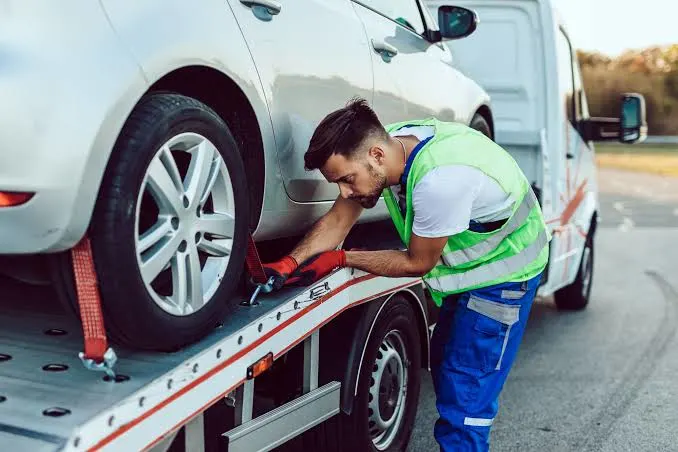
Once the truck arrives, the operator positions the vehicle for loading, accounting for wheel placement and the correct attachment points. Straps and other securing equipment are used to minimize movement during transport, since a vehicle that shifts in transit can suffer additional damage.
The Tow Truck Transports the Vehicle Safely
During transit, the operator manages speed, turns, and road conditions with the towed vehicle’s weight and balance in mind. Distance, traffic, weather, and the vehicle’s own condition can all affect how the trip is handled.
The Vehicle Is Unloaded at Its Destination
At the final stop, whether that’s a repair shop, a home driveway, or a storage facility, the vehicle is carefully removed from the truck and positioned in a way that keeps it safe and accessible for whatever comes next.
When Roadside Assistance Makes More Sense Than Towing
Not every breakdown requires a tow. A meaningful share of roadside calls can be resolved on the spot, which is why it’s worth understanding the difference before assuming your only option is waiting for a flatbed. The five situations below cover some of the most common examples.
Battery Problems May Only Need a Quick Jumpstart
A single dead battery, especially one caused by something like leaving headlights on, can often be resolved with a simple jumpstart. If the battery keeps dying repeatedly, though, that pattern usually points to a deeper electrical issue that may eventually require the vehicle to be transported for proper diagnosis.
Flat Tires Can Often Be Handled Where You Stop
A flat tire with a usable spare can typically be swapped on-site, getting you back on the road quickly. Severe tire damage, a missing spare, or damage that extends to the wheel itself can make towing the safer and more practical option instead.
Empty Tanks and Lockouts May Not Need a Tow
Running out of fuel or getting locked out of your own vehicle are both situations where the vehicle itself remains mechanically sound. Fuel delivery and lockout assistance can resolve these issues directly, without the vehicle ever needing to leave its current location.
A Disabled Vehicle May Need Full Towing
Serious mechanical failure, collision damage, overheating that hasn’t resolved, or another problem that makes driving genuinely unsafe usually means towing is the only reasonable path forward. In these cases, requesting emergency roadside assistance is often the fastest way to get an accurate assessment of whether the vehicle can be repaired on-site or needs to be transported.
Roadside Help Can Turn Into a Tow
Sometimes a technician arrives expecting a quick fix and discovers the underlying problem can’t be safely resolved at the roadside after all. In these situations, roadside assistance towing becomes the logical next step, since attempting to force a temporary fix could create a more dangerous situation later.
Choosing Between Flatbed and Wheel-Lift Towing

When you request a car towing service, the tow truck that shows up will typically use one of two main methods: flatbed or wheel-lift towing. Neither method is universally better; each is suited to different vehicles and situations, and understanding the difference helps explain why a dispatcher might choose one over the other.
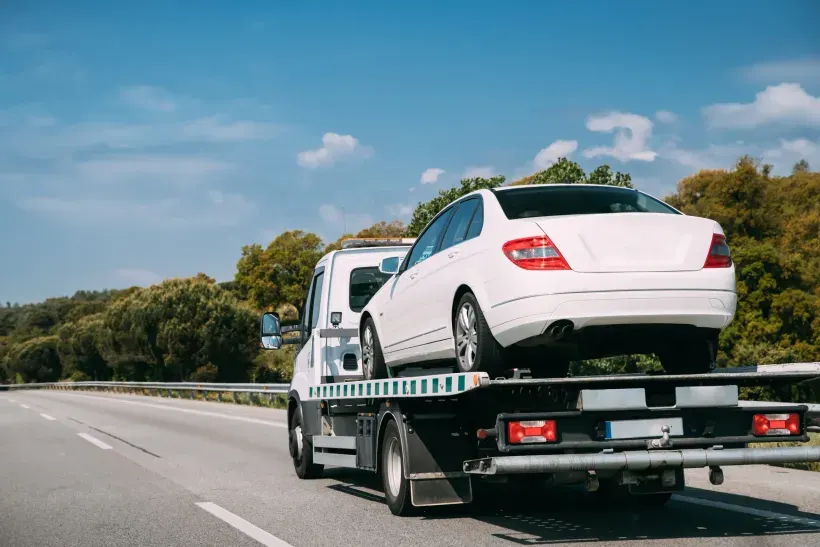
Flatbed towing service involves loading the entire vehicle onto a flat platform, keeping all four wheels off the road during transport. This method is often preferred for vehicles with damage, low ground clearance, or specialty configurations that make partial lifting risky. Wheel-lift towing, by contrast, lifts only a portion of the vehicle, typically the drive wheels, while the rest stays in contact with the road. This approach works well for many standard towing situations and tends to be quicker to set up.
| Factor | Flatbed Towing | Wheel-Lift Towing |
| Vehicle position | Entire vehicle sits on the platform | Only selected wheels are lifted |
| Typical use | Damaged, specialty, or sensitive vehicles | Many standard towing situations |
| Ground contact | Vehicle wheels remain off the road | Some wheels remain on the road |
| Main consideration | Loading space and suitable access | Correct wheel/drivetrain setup |
| Best choice depends on | Vehicle condition and towing requirements | Vehicle type and towing conditions |
What Determines the Cost of Car Towing?
There’s no single price that applies to every car towing service, since the final cost depends on a combination of factors specific to your situation. Anyone quoting a flat number without knowing these details is guessing rather than giving you an accurate estimate.
Mileage plays an obvious role, particularly for long-distance car towing, but it’s far from the only factor. Vehicle size and weight affect which equipment is needed, and the time of day matters too, since an emergency towing service called at 2 a.m. may carry different pricing than a scheduled daytime tow. Location and accessibility, including whether the vehicle is stuck somewhere difficult to reach, also factor into cost, along with whether the situation involves a straightforward tow or a more complicated recovery. Common cost factors include:
- Distance between pickup and destination
- Vehicle size, weight, and type
- Time of day and day of the week
- Accessibility of the pickup location
- Whether the job requires basic towing or more complex recovery
- Additional equipment needs, such as specialty straps or a flatbed
How Quickly Can a Tow Truck Usually Arrive?
Arrival times vary enough that no towing provider can honestly promise a fixed number of minutes for every call. Several factors influence how quickly a truck can reach you, and none of them are entirely within the towing company’s control.
Dispatcher workload, current traffic conditions, weather, the distance between the nearest available truck and your location, and whether the right equipment for your specific vehicle is already in use elsewhere all play a role. A 24-hour towing service is built to handle requests outside normal business hours, but even then, availability can shift depending on how many calls are coming in at once. Key factors affecting arrival time include:
- Current dispatcher and truck availability
- Traffic and road conditions between the truck and your location
- Weather conditions affecting travel speed
- Distance from the nearest suitable tow truck
- Whether specialty equipment is required for your vehicle
It’s worth remembering that a quoted ETA is an estimate, not a guarantee, and it can shift if road conditions change or if the company is handling a surge in emergency requests.
Which Vehicles Can Automotive Towing Services Handle?
Towing providers work with a wide range of vehicles, though the specific equipment needed varies considerably depending on what’s being transported. Ordinary cars, SUVs, and pickup trucks make up the bulk of routine towing requests, but many providers also handle motorcycles and other specialty vehicles with appropriate equipment.
Vehicle weight and dimensions matter directly here, since a truck rated for a standard sedan isn’t necessarily equipped to safely handle a heavier vehicle. Modified vehicles, luxury cars, electric vehicles, vehicles with visible damage, or anything with unusually low ground clearance may require specific handling or equipment that not every truck carries. Vehicle categories commonly handled include:
- Standard passenger cars and SUVs
- Pickup trucks and larger personal vehicles
- Motorcycles, which typically require specialized equipment
- Low-clearance or modified vehicles needing careful loading
- Electric vehicles, which often require flatbed transport rather than wheel-lift towing
What Makes Emergency Towing Different From Routine Towing?
Emergency towing generally applies to situations where safety is an immediate concern, not just a matter of convenience. A vehicle blocking a traffic lane, a breakdown on a highway shoulder with fast-moving traffic, a collision, or a severe mechanical failure all fall into this category, and location safety should be considered before simply waiting for a truck to arrive.
When calling for urgent help, providing clear information helps the dispatcher respond appropriately: your exact location, whether the vehicle is blocking traffic, whether anyone is injured, and the nature of the problem. A few safety points worth keeping in mind while you wait:
- Move to the safest possible position, away from active traffic if you can do so safely.
- Turn on hazard lights to increase visibility.
- Stay inside the vehicle if you’re in a high-traffic area, unless it’s unsafe to do so
- Avoid standing directly behind or in front of the vehicle.
An emergency towing service is generally built to prioritize these situations, and a 24-hour towing service specifically ensures that timing, whether it’s 3 p.m. or 3 a.m., doesn’t leave a driver without an option.
How Far Can a Towing Company Transport Your Car?
Towing distance can range from a short trip across town to a much longer haul, and the right approach depends on where the vehicle actually needs to go. A short local tow, such as from the roadside to a nearby repair shop or back to your home, is the most common scenario and usually involves fewer logistical considerations.
Long-distance car towing introduces additional variables: the vehicle’s condition needs to hold up over more miles, not every truck is available for extended trips, and providers may have different policies about how far they’re willing to travel. Before arranging a longer tow, it helps to confirm a few specifics:
- The exact destination address and any access restrictions
- Whether the quoted price is based on mileage, flat rate, or another structure
- Expected transit time for the distance involved
- Whether the same truck will handle the entire trip or a transfer is involved.
How to Prepare Before the Tow Truck Arrives
A little preparation can make the entire towing process smoother and help ensure the right equipment shows up the first time.
- Provide your exact location, including cross streets or landmarks if a precise address isn’t available.
- Describe the vehicle’s condition clearly, including any visible damage or specific symptoms.
- Confirm the destination address before the truck arrives.
- Mention any accessibility issues, such as a narrow driveway or a vehicle stuck off the road.
- Remove valuables from the vehicle if it’s safe to do so
- Secure loose items inside the car so they don’t shift during transport.
- Take photos of the vehicle’s condition before it’s loaded, for your own records.
- Stay in a safe location away from traffic while you wait.
Giving accurate, specific information upfront helps the towing company send a truck equipped for your exact situation rather than guessing based on limited details.
How to Choose a Reliable Local Towing Company
Choosing a towing provider based purely on the lowest advertised price can lead to unpleasant surprises later. A few things worth evaluating instead:
- Confirm the company carries appropriate licensing and insurance.
- Ask whether their equipment matches your specific vehicle type.
- Look for clear, upfront pricing rather than vague estimates.
- Check whether they offer the availability you need, including nights or weekends.
- Pay attention to how clearly they communicate throughout the process.
- Look into documented customer experiences where available.
A local towing company that can correctly identify the right method and equipment for your vehicle is generally more valuable than one that simply sends whatever truck happens to be closest. That distinction often becomes clear only once a job requires something beyond a standard tow.
Common Towing Mistakes That Can Cost You More
A handful of avoidable mistakes tend to show up repeatedly when drivers arrange towing under pressure.
- Accepting unclear pricing: Ask for a specific breakdown before agreeing to service, rather than assuming a quoted number covers everything.
- Giving incomplete vehicle information: Leaving out details like drivetrain type or visible damage can result in the wrong truck being sent.
- Choosing unsuitable equipment: A truck that isn’t matched to your vehicle’s weight or configuration can risk further damage during transport.
- Ignoring destination details: Failing to confirm the exact drop-off location or its accessibility can cause delays once the truck is already loaded.
- Failing to explain vehicle damage: Not mentioning existing damage can lead to disputes later about what happened during transport.
Avoiding these issues generally comes down to communicating clearly and asking questions before the truck arrives rather than after.
How Towing Technology Is Changing Roadside Service
Towing has changed considerably from a purely phone-based dispatch model. Many providers now use GPS-based dispatching to identify the nearest available truck more efficiently, along with live ETA updates that give drivers a clearer sense of when help will actually arrive. Digital communication and electronic receipts have also become more common, reducing some of the uncertainty that used to surround the process.
Some networks now coordinate roadside help through real-time dispatch and tracking systems, which can improve communication between drivers, dispatchers, and the operators actually en route. It’s worth noting that not every towing provider has adopted these tools to the same degree, so the specific experience can still vary. Common technology improvements include:
- GPS-based dispatch for faster truck assignment
- Live ETA tracking for waiting customers
- Digital communication throughout the process
- Electronic receipts and documentation
What to Check Before Approving a Tow
Before authorizing any towing service, it’s worth confirming a few key details so there are no surprises once the job is underway.
- The estimated total price, including any additional fees
- The exact destination and confirmation that it matches what you requested
- Which towing method will be used and why
- Documentation of the vehicle’s current condition before loading
- An updated estimated arrival time
- Accepted payment methods and when payment is expected
Confirming these details upfront helps you make an informed decision, since not every towing company follows the same pricing structure or service process. If you have specific questions about how a provider handles any of these points, reaching out through their contact page before you need a tow can save time during an actual emergency.
Final Thoughts on Automotive Towing Services
Understanding how automotive towing services actually work, from dispatch and equipment selection to the choice between flatbed and wheel-lift methods, makes the entire process far less stressful when you actually need help. The right approach always depends on the specific vehicle, its condition, and the situation at hand, which is why no single method or price applies universally across every tow.
Choosing a provider who clearly explains their equipment, pricing, expected arrival time, and destination handling before service begins puts you in a much better position than simply accepting the first offer that comes along. If your vehicle ever reaches a point where it can’t be safely driven, reaching out to a qualified towing provider is the most direct way to get it, and yourself, somewhere safe.
FAQs About Automotive Towing Services
Towing situations often raise a few recurring questions, especially around cost, timing, and what different vehicles require. The following questions cover practical concerns that come up frequently but weren’t addressed as standalone sections above. For anything not covered here, has additional answers.
If the problem can be fixed on the spot, like a dead battery, a flat tire with a working spare, or an empty tank, roadside assistance is usually enough. If the vehicle has a mechanical failure, collision damage, or another issue that makes driving unsafe, towing is generally the right call.
Give your exact location, a clear description of the vehicle’s condition and the problem, the intended destination, and any accessibility issues, such as a narrow driveway or the vehicle being stuck off the road.
Yes. Flatbed towing keeps all four wheels off the road during transport, which makes it a common choice for damaged, non-running, or low-clearance vehicles that shouldn’t have any wheels rolling.
Pricing can vary by time of day, and many providers do charge differently for after-hours or emergency calls compared to scheduled daytime service, so it’s worth asking about this upfront.
Electric vehicles often require flatbed transport rather than wheel-lift towing, since moving the wheels on some EVs can generate unwanted electrical activity in the drive system. It’s best to confirm this with the provider when booking.